Back when Berkshire Hathaway was still a textile company, it made the lining that goes inside a suit jacket. One day the managers came to Buffett with good news. A new loom was available that would make the whole operation 15% more efficient!
Buffett’s response was to close the business.
It sounds perverse, but he could see how the movie ended. Every competitor could buy the same loom. They’d all get 15% more efficient, they’d all cut prices to win orders, and the entire benefit would end up with the bloke buying the suit. Shareholders would get the bill for the loom and not much else.
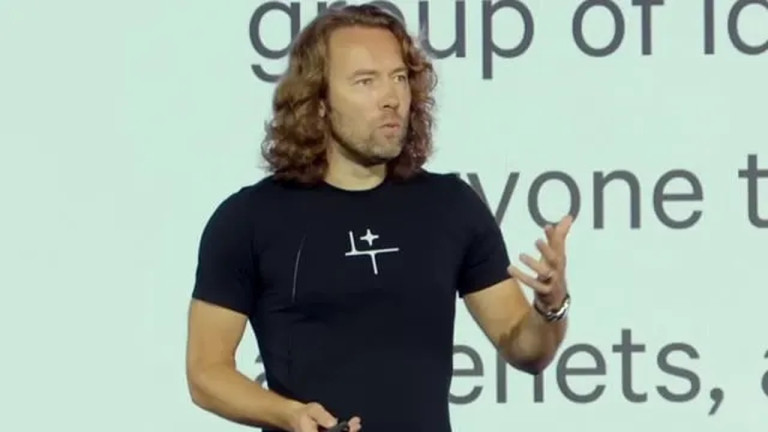
John Hempton of Bronte Capital told that story on Joe Walker’s podcast recently (which I highly recommend listening to), in the context of how the idea relates to the AI build-out. But it offers an insight for investors that can be applied across a much wider range of situations.
Hempton reckons there are four features that, when they show up together, make for the worst business in the world. Each is worth understanding on its own.
The first is a high capital cost, or sometimes called high capital intensity. You have to spend big before you earn a cent, and the money is usually borrowed. A steelworks. A fleet of planes. A mine. Once it’s built, the spending is sunk and the interest bill is fixed.
The second is a low marginal cost. Once the thing exists, producing one more unit costs next to nothing. An empty seat on a plane that’s flying anyway is almost free to fill. That sounds like a good thing, and in good times it is. In bad times it’s the trap because any sale that covers that tiny extra cost is better than no sale, so everyone keeps producing and everyone keeps discounting. Prices sink towards marginal cost, leaving little to cover the cost of the plant and equipment.
The third is a product people buy mainly on price, i.e. a commodity. A tonne of steel is a tonne of steel. Nobody has brand loyalty to spodumene. If the customer can’t tell your output from the next guy’s, you have essentially zero pricing power. The lowest-cost producer sets the price.
The fourth is steady technical improvement, and it’s really the accelerant. If next year’s plant is a bit better than this year’s, someone will always build it. That guarantees the next glut while at the same time making your productivity relatively worse. And it doesn’t take much. As Hempton points out, solar panels have improved by only a couple of per cent a year, but that was more than enough for every Chinese manufacturer to need rescuing by the state at least three times. Panels went from around $5 a watt to 15 cents, which was great for the world, but hopeless for the people making them.
Any one of these factors alone is survivable. Plenty of wonderful businesses are capital hungry, and plenty sell a commodity. But it’s the combination that does the damage. You can’t stop producing, because the marginal cost is too low. You can’t raise prices, because the product is a commodity. You can’t stop investing, because the competition won’t. And the debt doesn’t care about any of it.
One of the best examples is fibre optics. Around the turn of the century, Global Crossing, WorldCom, Qwest and others spent billions laying cable. Then better lasers let a single fibre carry many colours of light at once, multiplying its capacity. The end result was that brand new cable was never even switched on. Billions were invested for virtually no return. Still, the internet we all use was built on it and it represented a foundational pillar for one of the greatest value creation stories in history.
As Hempton put it, they changed the world and got paid with a doughnut.
We’ve seen plenty of local versions. Arrium, the old OneSteel, collapsed in 2016 owing more than $2 billion as a global steel glut crushed prices. Virgin Australia had racked up seven straight annual losses before COVID arrived, then went into administration with about $5 billion of debt. Core Lithium shipped its first concentrate from Finniss in early 2023. Within a year the spodumene price had fallen 85% and mining was suspended.
Which brings us to AI. Hempton calls it the most amazing technology of his lifetime and the worst investment profile he’s ever seen. Models cost billions to train and comparatively little to run. Data centre compute is about as interchangeable as a product gets. And the chips get better every year and tend to be effectively obsolete in about five years. With the planned spend at roughly $7 trillion by 2030, it’ll take a load of revenue to justify it.
Maybe one lab is able to create an edge, and can maintain it. But that’s very much an open question.
(Incidentally, Hempton said he’ll buy some Anthropic shares when it lists because if it does have an edge the upside will be massive and any lead may turn out to be difficult to catch. Although, he admitted, this was not his base case.)
Someone will make money from all of this, of course. Probably a lot of it. That will probably be in higher layers that can leverage the foundational infrastructure, but even at the base layers things start looking attractive at a low enough price (something any good value investor knows well!).
After the telecom bust, David Teoh went to the liquidators’ auctions in America and bought network gear for two to five cents on the dollar. That’s how TPG got started, and how it had a big advantage over the incumbents. Much, MUCH lower sunk costs. And therefore could price lower and still remain viable. Genius.
The point is, it’s worth being familiar with these patterns, and then avoiding them like the plague. If you see a capital-intensive business, with low marginal costs, selling a commodity-like product whose production gets more and more efficient each year… run!
Be especially wary when an entire industry is expanding at once.
And when management gets excited about a new, more efficient plant, ask the Buffett question: “Who gets to keep the efficiency gains?”
If the answer is the customer, that’s probably the better seat to be in.
Disclaimer– Strawman is not a broker and you cannot purchase shares through the platform. All trades on Strawman use play money and are intended only as a tool to gain experience and have fun. No content on Strawman should be considered an inducement to buy or sell real world financial securities, and you should seek professional advice before making any investment decisions.